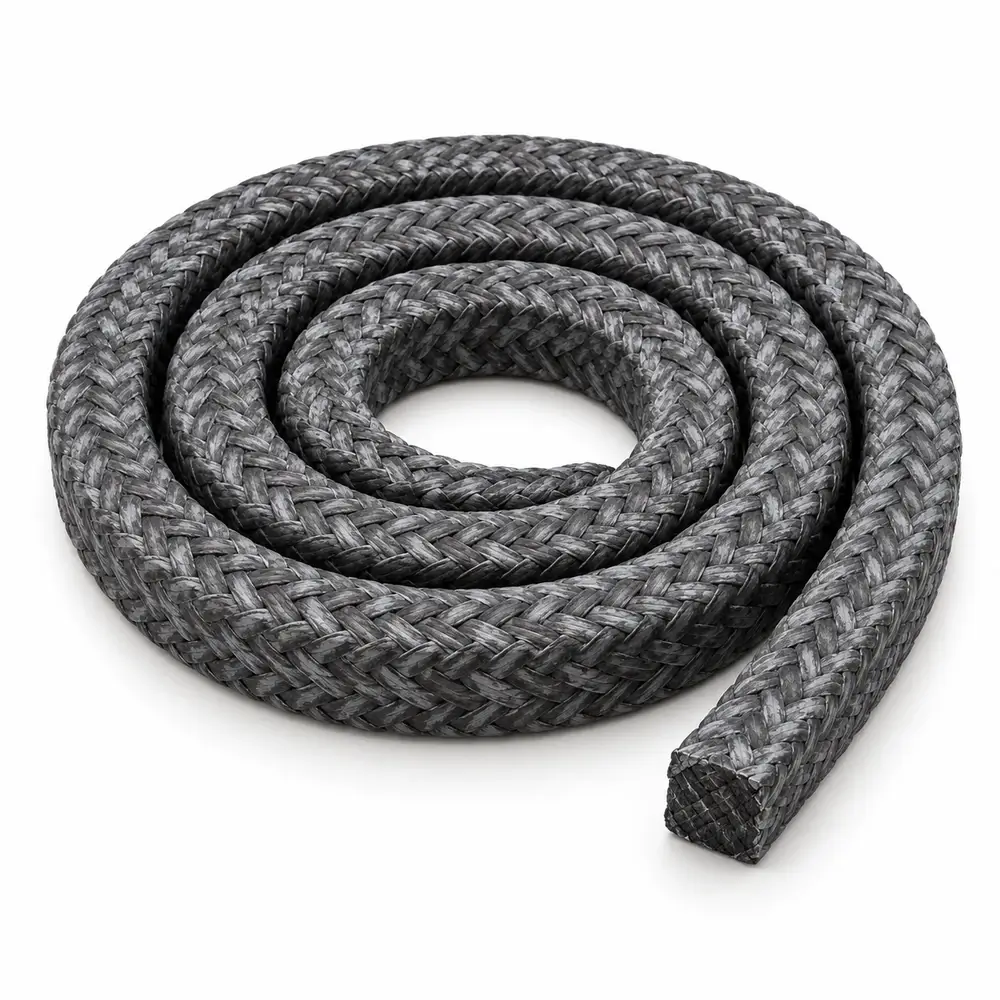
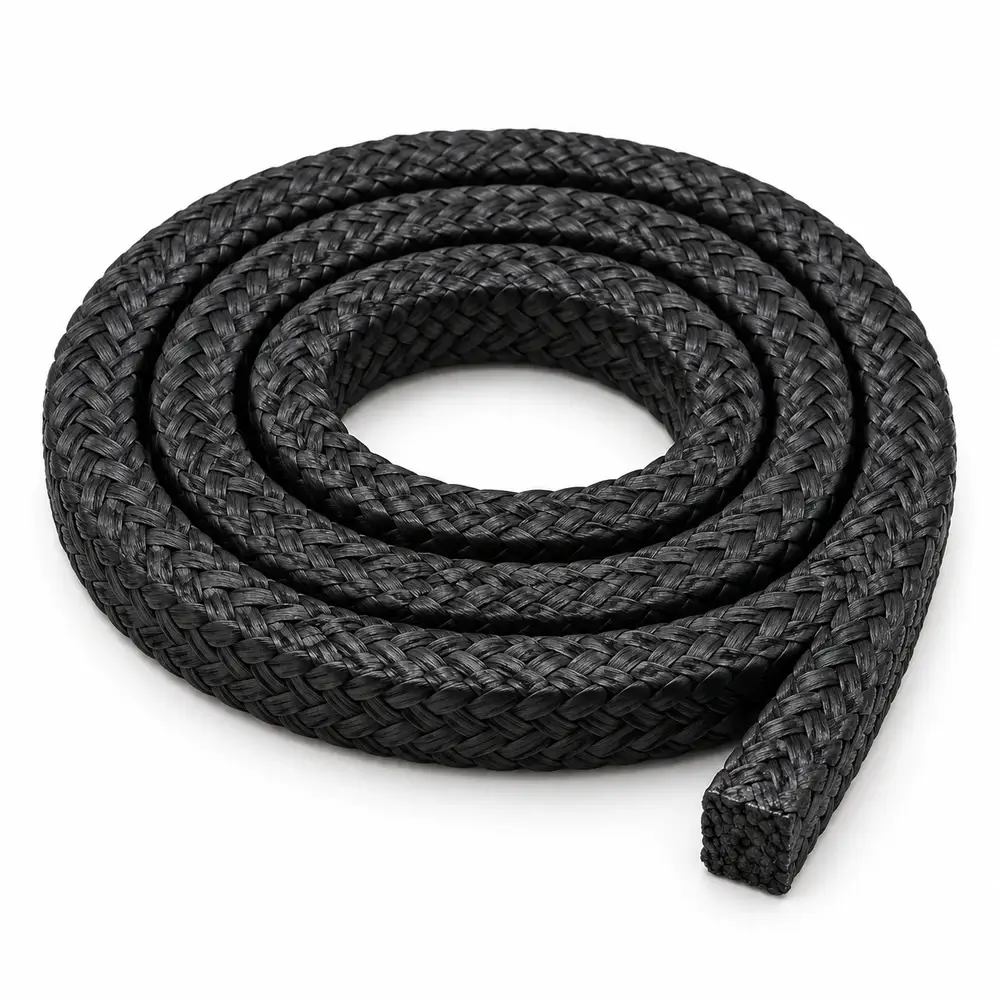
Are Carbon Fiber Packings Electrically Conductive? If you are sourcing pump and valve sealing for chemical processing, power generation, or oil and gas service, that single question can decide whether a packing ring protects a system or creates a hidden ignition risk. Carbon fiber packings are not a single, uniform product. The fiber itself can conduct electricity, but the finished packing may be conductive, static-dissipative, or effectively insulating depending on fiber type, carbonization temperature, graphite content, binder chemistry, and manufacturing density. A common trap for procurement teams is to compare a supplier’s data sheet with an old material name and assume performance is equal. In reality, surface resistance can vary by many orders of magnitude. The practical answer is: carbon fiber packings can be electrically conductive, but only when the construction and test method are specified. For buyers, this means you need more than a generic “carbon fiber” label; you need surface resistance values, test standard, temperature limits, chemical compatibility, and a supplier who can document consistency from lot to lot. This guide explains what drives conductivity, how to read a specification, which parameters to request in an RFQ, and how Ningbo Kaxite Sealing Materials Co., Ltd. helps purchasers match packing construction to real operating conditions. You will also find selection tables and answers to common procurement questions so your team can move from a vague material name to a verified sealing solution.
Pain scenario: A maintenance engineer finds a carbon fiber packing listed for a solvent pump and assumes it will dissipate static. The purchasing team orders by material name alone, but the delivered packing contains a high-performance binder that isolates the fiber network. Months later, the team cannot explain why resistance readings are inconsistent across lots.
Solution: Treat electrical conductivity as a specified performance property, not a material assumption. Ask for surface resistance, test voltage, test standard, conditioning method, and the exact construction. A conductive carbon fiber packing should have a documented conductive pathway through the braid, not merely conductive fibers dispersed in an insulating matrix.
| Packing construction | Typical surface resistance range | Buyer classification | Procurement note |
|---|---|---|---|
| Carbon fiber with graphite, high graphite loading | 101–104 Ω | Conductive | Request lot certificates and test voltage; confirm graphite does not compromise chemical compatibility. |
| Carbon fiber, conductive carbon black or graphite additive | 102–106 Ω | Static-dissipative to conductive | Verify the additive is uniformly distributed and suitable for the media. |
| Carbon fiber with PTFE or elastomer binder | 109–1012 Ω or higher | Insulating unless modified | Do not assume conductivity from the fiber name; request measured resistance. |
| Carbon fiber with proprietary conductive binder | 103–108 Ω | Application-specific | Match the resistance target to the hazard and verify with the end user’s standard. |
Pain scenario: Two suppliers send data sheets for “carbon fiber packing.” One reports 104 Ω and the other reports 1010 Ω. The buyer sees the same material name and assumes one sheet is wrong, but both can be accurate because the constructions and test conditions are different.
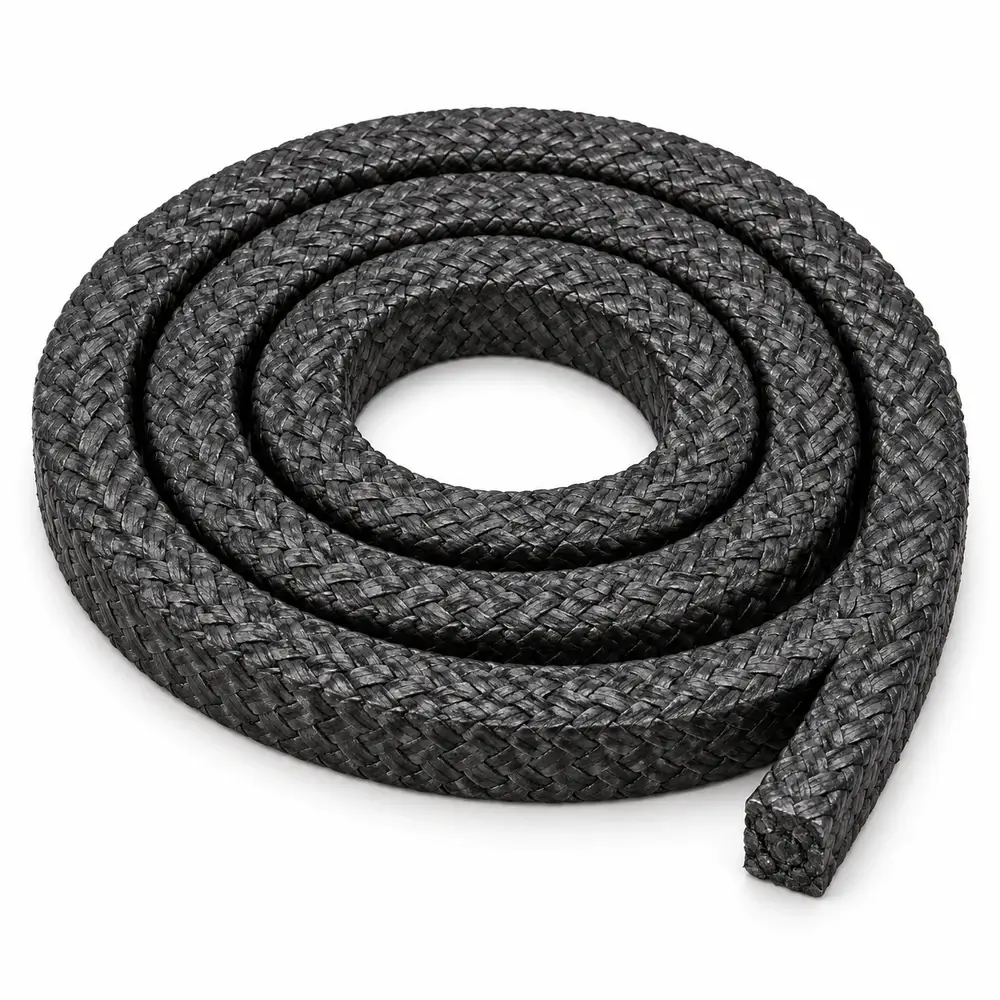
Solution: Compare the full conductivity stack: fiber precursor, carbonization level, graphite or carbon additive, binder system, braid density, and test method. Surface resistance depends on contact pressure, humidity, electrode geometry, and voltage. For sealing applications, conductivity is only useful if the packing also maintains compression, recovery, chemical resistance, and low friction.
| Parameter | Why it changes conductivity | What to specify in an RFQ |
|---|---|---|
| Fiber type and carbonization | Higher carbon content and graphitic structure can improve electron movement. | Fiber grade, carbon content, and supplier’s typical resistance range. |
| Graphite content | Graphite flakes or powder can bridge fiber contacts and lower resistance. | Graphite loading, purity, and compatibility with the process media. |
| Binder chemistry | Insulating binders can block conductive paths; conductive binders can preserve them. | Binder type, maximum temperature, pH range, and resistance after conditioning. |
| Braid density | Dense braids can increase contact points, but excessive binder can isolate fibers. | Cross-section, density, and compression recovery data. |
| Test method | ASTM D257, IEC 62631, or internal methods can produce different readings. | Standard, voltage, electrode type, humidity, and conditioning time. |
Pain scenario: A purchasing team receives quotes that look identical except for price. The low-cost offer omits test standards, temperature ratings, and lot-to-lot controls. The plant installs the packing, then discovers the conductivity claim cannot be verified against the site’s static-control requirement.
Solution: Build a conductivity and sealing parameter table into the RFQ. Require the supplier to state values, test methods, and acceptance limits. This converts a vague material purchase into a measurable supply agreement and protects the buyer from hidden performance gaps.
| RFQ parameter | Why it matters to the buyer | Suggested RFQ requirement |
|---|---|---|
| Surface resistance | Defines conductive, static-dissipative, or insulating behavior. | Report value with test voltage and standard; state lot acceptance range. |
| Temperature range | Heat can oxidize fibers or degrade binders, changing resistance and sealing life. | Continuous and peak temperature in the actual media. |
| Chemical compatibility | Graphite, binders, and lubricants must resist acids, caustics, solvents, or steam. | Media concentration, pH, pressure, and aeration conditions. |
| Shaft speed and pressure | Mechanical wear can alter surface contact and conductivity over time. | Speed, pressure, gland load, and expected service interval. |
| Certification and traceability | Purchasers need evidence for audits and safety reviews. | Batch certificate, test report, material declaration, and date code. |
Pain scenario: Static control is treated as a checkbox during procurement, but the packing is installed in a valve with intermittent dry running or in a pump handling low-conductivity solvent. The selected product passes a bench resistance test yet performs poorly in service because temperature, compression, and media exposure were not evaluated.
Solution: Match the packing to the application, not only to the resistance number. For conductive service, confirm that the braid remains conductive after compression and media exposure. For chemical duty, verify that graphite or conductive additives do not accelerate corrosion or contaminate the product.
| Application | Conductivity need | Selection direction | Validation step |
|---|---|---|---|
| Solvent transfer pump | Static dissipation is often required. | Carbon fiber with graphite or conductive additive; verify compatibility. | Surface resistance after media immersion and compression. |
| Steam valve | Conductivity may be secondary to thermal stability. | Carbon fiber grade with appropriate binder and temperature rating. | Heat aging and compression recovery test. |
| Chemical process valve | Depends on hazard review and site standard. | Conductive or static-dissipative packing with documented pH range. | Chemical resistance data and batch test certificate. |
| Dry-running or high-speed equipment | Wear can change contact resistance. | Low-friction conductive construction with proven wear data. | Service simulation or field trial with resistance checks. |
No. Carbon fiber is conductive, but a finished packing can be insulating if the binder, lubricant, or coating separates the fiber network. Buyers should ask for measured surface resistance and the test method. A grade intended for static dissipation should have a stated resistance range and a lot acceptance limit, not only a material description.
Request a sample, a test report, and the supplier’s internal acceptance range. Confirm the test standard, voltage, electrode configuration, conditioning humidity, and whether the value applies to the finished braid or only to the raw fiber. For critical service, require a batch certificate with each shipment and repeat resistance checks after compression or media exposure.
Pain scenario: A supplier sends a certificate with a single resistance value but no method, no acceptance range, and no date code. The buyer cannot determine whether the value represents the shipped lot or a historical development sample.
Solution: Use a verification checklist before approval. The strongest suppliers provide traceable test data, consistent raw materials, and application support that connects conductivity to sealing performance.
| Verification item | Acceptable evidence | Red flag |
|---|---|---|
| Test standard | ASTM D257, IEC 62631, or a defined internal method. | “Conductive” with no method or units. |
| Lot traceability | Batch number, date code, and certificate tied to the shipment. | Generic certificate reused across orders. |
| Acceptance range | Upper and lower resistance limits. | Single typical value without limits. |
| Application review | Questions about media, temperature, pressure, and speed. | Immediate price quote without technical review. |
| Consistency controls | Incoming material checks and finished-product testing. | No explanation of lot-to-lot variation. |
Ningbo Kaxite Sealing Materials Co., Ltd. works with procurement and engineering teams that need more than a catalog description. The company supports carbon fiber packing selection with attention to electrical conductivity, graphite content, binder compatibility, temperature limits, and chemical service conditions. Buyers can review product information at https://www.carbon-fiber-packing.com and send operating conditions, resistance targets, and media details to [email protected] for a focused recommendation. Share your pump or valve application, required conductivity class, and test standard so the team can help you verify the right packing construction before purchase.
Chung, D. D. L., 2001. Electromagnetic interference shielding effectiveness of carbon materials. Carbon, 39(2).
Chand, S., 2000. Review: Carbon fibers for composites. Journal of Materials Science, 35(6).
Park, S. J., and Seo, M. K., 2011. Carbon fiber-reinforced polymer composites: Electrical and mechanical behavior. Journal of Industrial and Engineering Chemistry, 17(2).
Al-Saleh, M. H., and Sundararaj, U., 2009. A review of vapor grown carbon nanofiber/polymer conductive composites. Carbon, 47(1).
Bauhofer, W., and Kovacs, J. Z., 2009. A review and analysis of electrical percolation in carbon nanotube polymer composites. Composites Science and Technology, 69(10).
Li, J., and Shimizu, H., 2009. Toward a stretchable, elastic, and electrically conductive polymer composite. Macromolecules, 42(7).
Thongruang, W., Spontak, R. J., and Balik, C. M., 2002. Bridged double percolation in conductive polymer composites. Polymer, 43(8).
Chen, G., and Weng, W., 2005. Preparation and characterization of graphite-filled conductive composites. Journal of Applied Polymer Science, 98(3).
Gojny, F. H., Wichmann, M. H. G., Fiedler, B., and Schulte, K., 2005. Influence of different carbon nanotubes on the mechanical properties of epoxy matrix composites. Composites Science and Technology, 65(15–16).
Friedrich, K., and Schlarb, A. K., 2008. Tribology of polymeric nanocomposites: Friction and wear of bulk materials and coatings. Wear, 265(7–8).
-